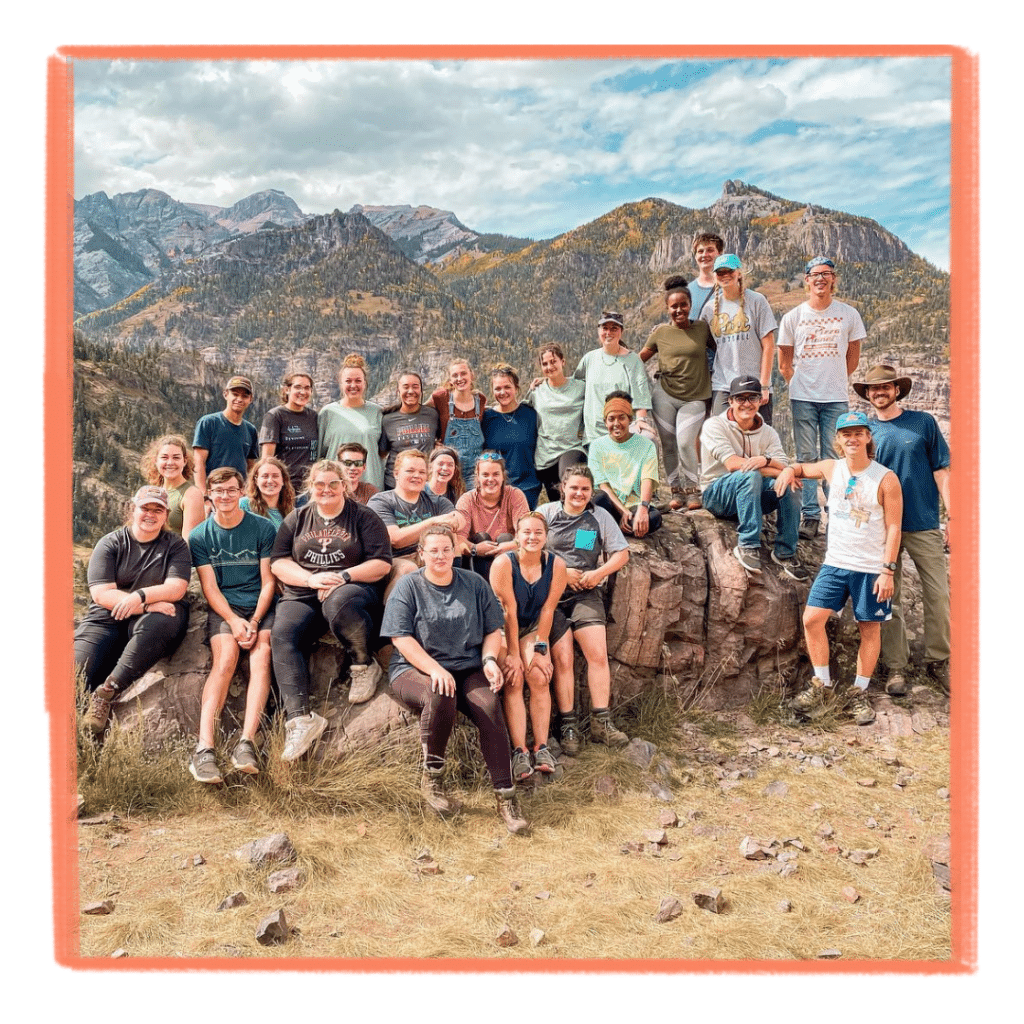
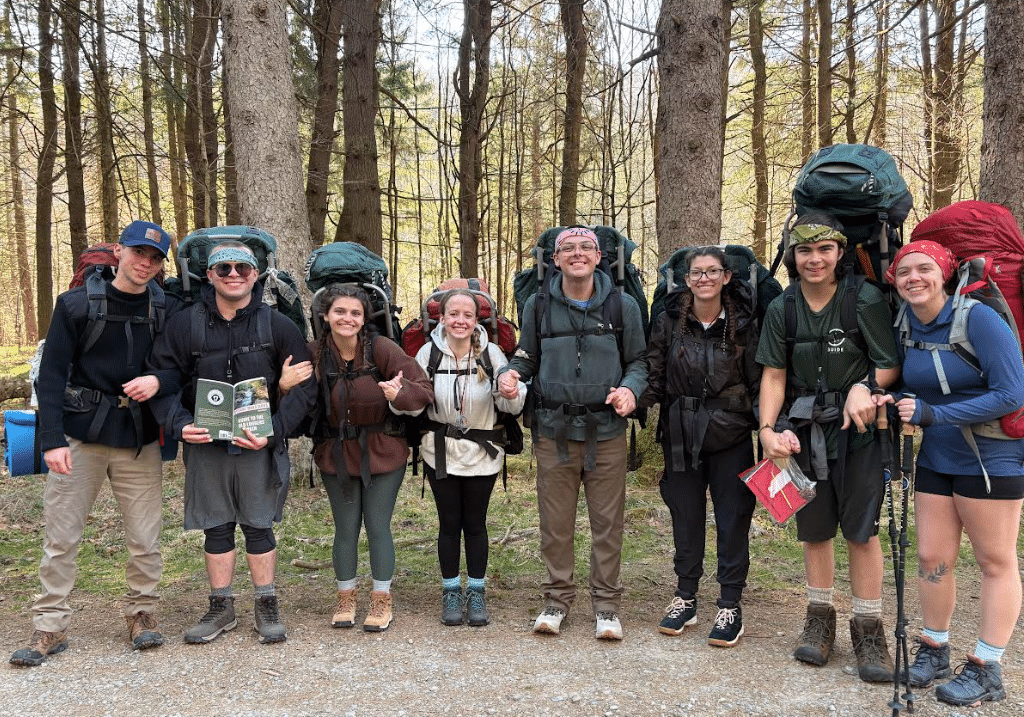
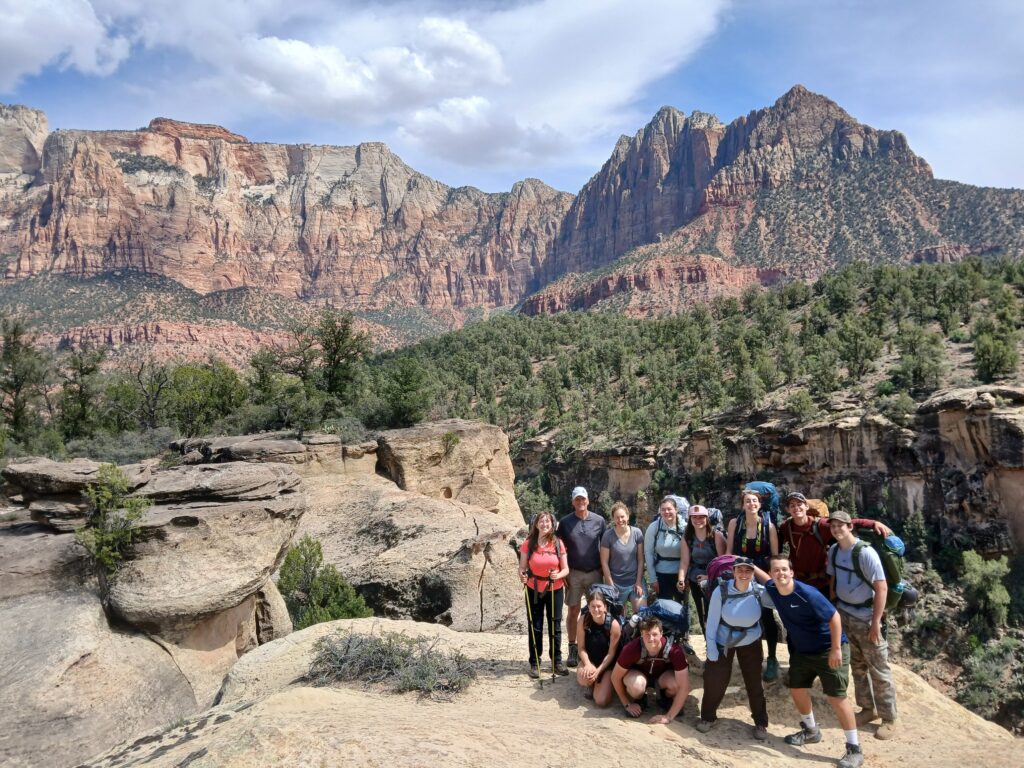
There is a unique relief that comes with the first night back in a real bed after a week in the wilderness. But as our students at both our first-year sites and our second-year OLX site return to “civilization,” they bring back far more than just tired muscles. They bring back a renewed understanding that in God’s Kingdom, nothing is wasted.
The wilderness is a demanding teacher. It uses discomfort to reveal what is truly in our hearts, forcing us to decide whether we will rely on our own strength or depend on the Lord. This year, as we navigated the wild places of the West and the trails of the East, we leaned into two specific metaphors that define the OneLife journey.
The Slot Canyon: Beauty Born of Pressure
For our students exploring the West, the slot canyon became a living parable. A slot canyon is not formed by gentle means; it is the result of immense pressure and the force of water carving its way through solid rock over centuries.
We share with our students that their lives often mirror this process. We frequently view pain, pressure, or “tight spaces” as things to be avoided. However, the slot canyon reminds us that through the deepest brokenness and the hardest struggles, God is often creating something of breathtaking beauty and redemption. It is within those narrow, difficult passages of life that He carves out a new purpose and value in us that wouldn’t exist without the struggle.
The Summit: Perspective for the Valley
Whether in Utah or on Trek, the goal is often the summit. Reaching a peak is a multifaceted experience—it is simultaneously exhausting, dangerous, and empowering. But we remind our students that we don’t climb just for the “high” of the achievement.
The summit is vital because of the perspective it provides. From the top, you can see the path you’ve traveled and the landscape ahead with a clarity that is impossible to find among the trees. This “mountaintop moment” gives healing and purpose to life in the valley. We don’t live on the summit; we live in the valley, because that is where Jesus calls us to follow Him and love our neighbors. We go to the peak so that we can serve better in the plains.
Deuteronomy 8: The Purpose of the Hunger
Throughout these trips, we anchored our hearts in Deuteronomy 8:2-3: “Remember how the Lord your God led you all the way in the wilderness these forty years, to humble and test you in order to know what was in your heart, whether or not you would keep his commands. He humbled you, causing you to hunger … to teach you that man does not live on bread alone but on every word that comes from the mouth of the Lord.”
The wilderness causes a certain kind of hunger—not just for food, but for comfort, certainty, and self-reliance. This “hunger” is a gift because it teaches us that we do not live by bread alone. Our students leaned into very uncomfortable situations, choosing to trust God’s Word when their physical surroundings felt overwhelming. This intentional stretching is where true maturity happens.
A Community Forged in the Wild
Perhaps the most beautiful takeaway from these last couple of weeks is the growth of our community. Sharing the weight of a pack, the struggle of a climb, or the awe of a canyon sunset creates a bond that cannot be forged in a classroom. This shared experience is powerful; it turns a group of students into a unified body, dependent on the Lord and on one another.
As we move into a season of rest and transition, we are profoundly thankful. The LORD was faithful in the wilderness, and we know that every mile hiked was “so, so worth it.” We return with hearts full of stories and spirits prepared for whatever “valley” the Lord calls us to next.