Most people spend years learning theology in a standard classroom. You sit at a desk, open a textbook, take notes on lectures, and memorize concepts for a test on Friday.
Head knowledge is important, but there is a massive difference between knowing a concept in your mind and experiencing it in your life.
What if, instead of just reading about the overarching story of the Bible (Creation, Fall, Redemption, and Restoration) you actually got to step into it?
That is the exact heart behind one of OneLife’s Experiential Learning Week.
Joseph, a student on our Media and Events Committee at our Pleasant View campus, took us inside what it looks like when the biblical worldview shifts from lectures to real-life immersion.
Creation: Joy, Creativity, and Awe
The biblical narrative begins with Creation. God brings beauty, order, purpose, and abundant life out of nothing. To kick off the week, students didn’t start with a syllabus; they started with art, nature, and community.
“We were given puzzle pieces and got to use our creativity to paint them. Each puzzle piece represented our interests, our relationship to our name, and our relationship with Jesus. It was really cool seeing everyone’s creativity and how everyone’s piece was different but still connected to the bigger picture.” — Joseph
Experiential learning grounds abstract truths in physical objects. By painting individual puzzle pieces that fit into a larger collective display, students experienced the truth of Psalm 139:14: we are fearfully, wonderfully, and uniquely created, yet designed to fit into a broader body.
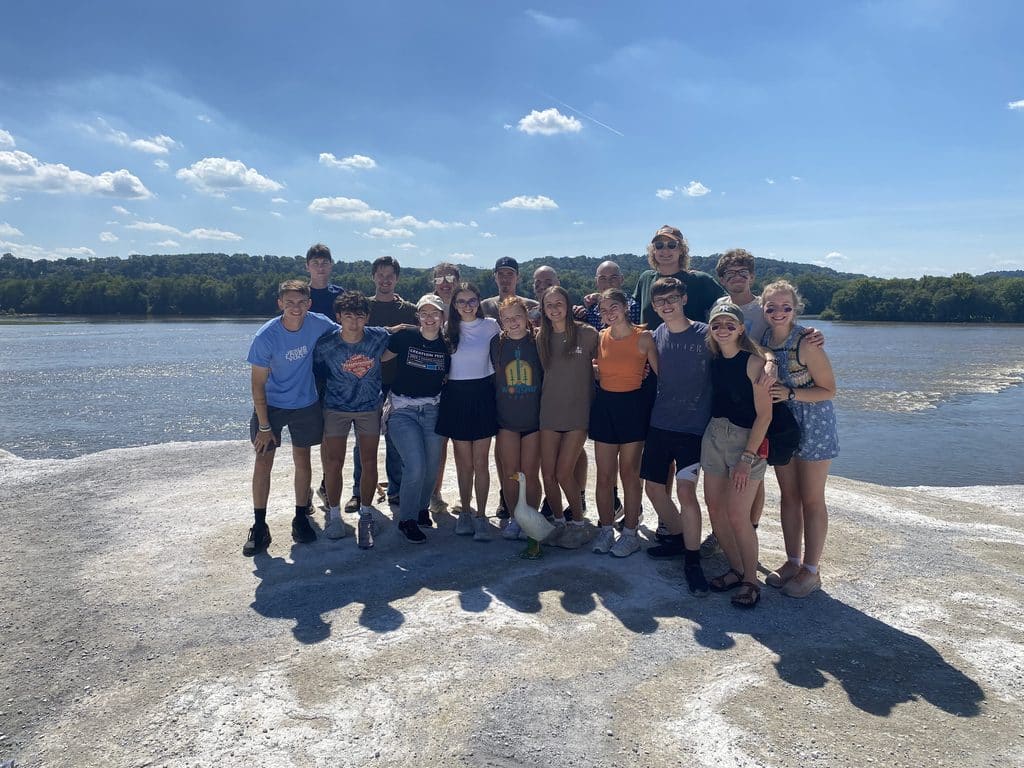
The day continued with simple joys that spark awe: meeting a cockatoo named Maggie, hiking the White Cliffs of Conoy overlooking the Susquehanna River, and ending the evening at a host family’s home with water slides, creek hangs, and Ranger rides.
Creation Day reminded students that God’s original design for humanity is full of freedom, beauty, shared joy, and unhindered fellowship.
The Fall: The Weight of Brokenness and Isolation
If Creation represents life as it was meant to be, The Fall represents what happens when sin enters the picture. But how do you help young adults understand the heavy, relational cost of sin without just giving a lecture?
You let them feel the contrast.
When students walked out of their dorm halls the next morning, the environment had completely flipped. Windows were blacked out, furniture was overturned, and strict rules were enforced: zero talking, no smiling, and no communication.
“We had to cut up our roommates’ puzzle pieces, which represented the way our sin doesn’t just hurt ourselves, but also hurts the people around us. It was definitely weird cutting up something that someone else had put time and meaning into, but it gave us a visual representation of how our choices can affect other people.” — Joseph
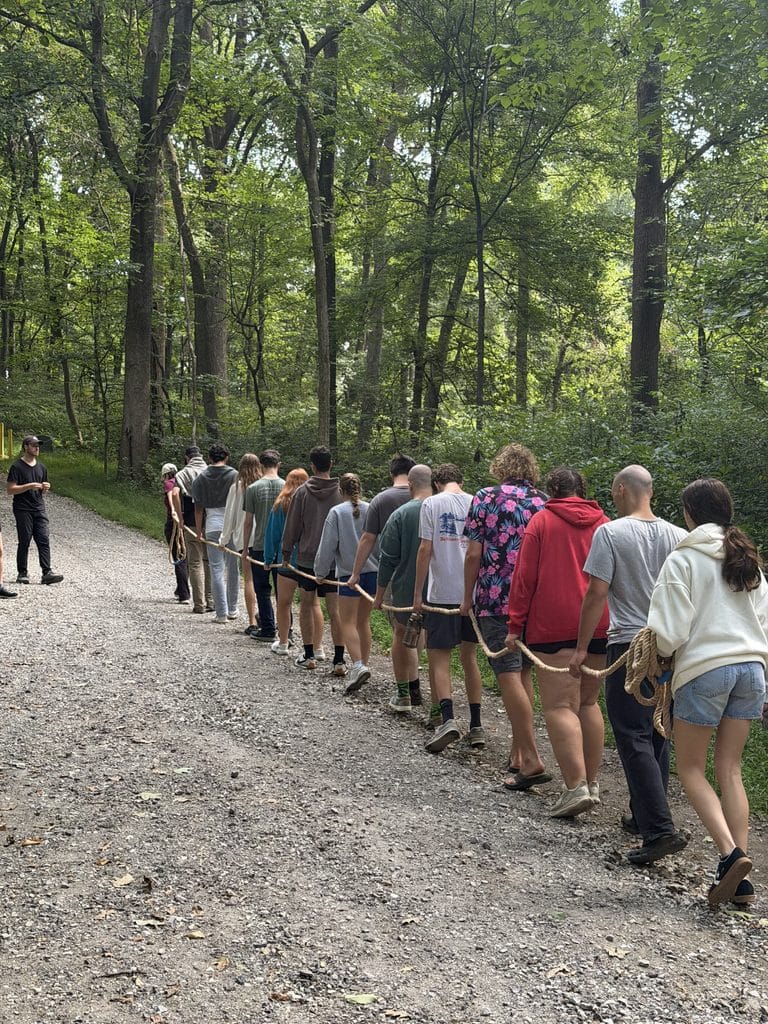
The simulation went deeper throughout the day:
- Bonded Marching: Students were roped together, forced to march up a mountain taking only a set number of steps at a time, and then forced to march backward…a physical metaphor for how sin restricts freedom and sets us back.
- Deprivation and Isolation: Sitting in dark common spaces for five hours without rest or communication, illustrating how sin isolates us from God and others.
- Global Inequality Simulation: Students were randomly divided into groups for dinner. One student received a full feast, another group got broth and crackers, and Joseph’s group received no dinner at all…going to bed hungry to understand the physical realities of a fallen, broken world.
Experiencing this contrast made one truth crystal clear: sin is never private. It breaks relationships, distorts community, and brings real pain.
Redemption & Restoration: Putting the Pieces Back Together
The gospel doesn’t leave us in the dark of The Fall. The ultimate turn in the biblical story is Redemption through Jesus and the ongoing work of Restoration.
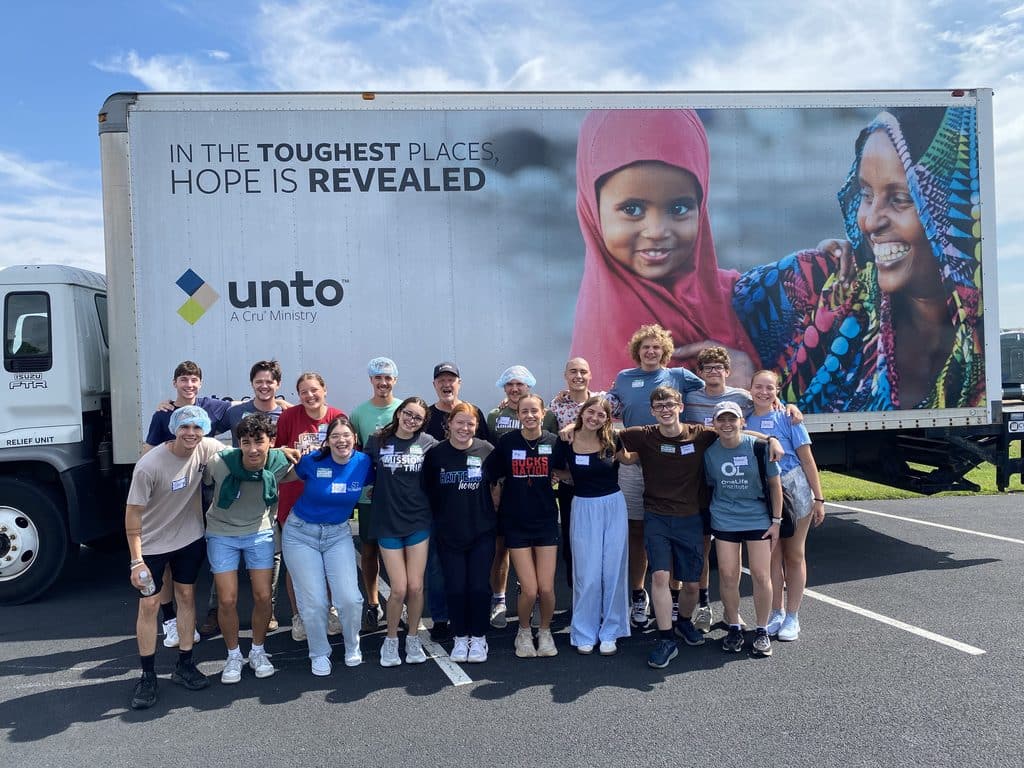
The following morning, the atmosphere shifted immediately. Silence was lifted, community was restored, and the cohort headed out to serve at Unto, a humanitarian organization, packing food pallets for oppressed nations overseas.
“After we came back and ate lunch, we got to go back to our puzzle pieces. This time, instead of cutting them apart, we got to put them back together. We took all of our cut-up pieces and arranged them into a cross, then glued them onto a poster board… We started with Creation, experienced The Fall, and then ended with Redemption and Restoration by putting those broken pieces back together around the cross.” — Joseph
This hands-on exercise brought the entire week into focus. The cross isn’t just an abstract theological symbol. It is the place where our brokenness, mistakes, and shattered relationships are redeemed and pieced back together into something beautiful.
Why Experiential Learning Matters
Educational psychologist David Kolb’s research on Experiential Learning Theory highlights that deep learning occurs in a four-stage cycle: Concrete Experience, Reflective Observation, Abstract Conceptualization, and Active Experimentation.
When students only receive lectures (abstract conceptualization), retention is low. But when they go through a concrete physical experience and reflect on it together, the lesson embeds into their character permanently.
As Joseph reflected at the end of the week:
“For me, one of the biggest things I took away from the week was that sin doesn’t only affect us. It affects the people around us too. But the story doesn’t end with The Fall. We got to physically see that brokenness represented through our puzzle pieces and then see them brought back together through the cross. I think that made Redemption and Restoration feel a lot more real to me.”
Beyond the Classroom
At OneLife, we believe the young adult years are too important to spend sitting passively in a lecture hall. Faith, leadership, and community must be lived, tested, and experienced in real time.
So if you want to see what experiential learning looks like in action, come visit for a Preview Day at one of our sites at Pleasant View, Three Springs, or Sakanaga.
Meet students like Joseph, talk with our staff, and see how a gap year can turn theological truth into a lifelong foundation.