

Watching your high school senior or young adult prepare for their next big season is a wild mix of emotions. You are proud, excited, and (if we are being honest) probably a little anxious about how they’ll handle the logistics of real life.
When paperwork, health forms, bank setups, and packing lists start piling up, your natural parental instinct is to jump into the driver’s seat and fix it for them. You want to save them time, spare them stress, and make sure nothing gets missed.
But after years of working in higher education, here’s our recommendation: Resist the urge to take charge.
Developmental psychology shows that young adults don’t learn self-regulation or independence in a vacuum. Neuroscience highlights the power of co-regulation. Co-regulation is the biological process where a young adult’s nervous system learns to handle stress and complex tasks by mirroring the calm, grounded guidance of a trusted adult.
Furthermore, educational pioneer Lev Vygotsky introduced the concept of the Zone of Proximal Development. This research proves that true learning happens in the sweet spot between what a student can do completely on their own and what they can achieve with guidance.
Our goal as parents and mentors isn’t simply to complete a checklist of tasks. It is to help them build self-efficacy, which is the psychological confidence that they are capable of navigating their own lives, decisions, and faith.
It might feel uncomfortable at first, but these 4 practical ways to “do things with them, not for them” during this season will set your student up for a future of success…not just in college, but on their trajectory into adulthood.
1. Let them Own of the Logistics
It is so much faster to just fill out health insurance forms, register for class credits, or book flight arrangements yourself. But every time you do work for your student, they lose out on the opportunity for a micro-lesson in adulting.
- The Principle: Guide them on where to find information if they hit a wall, but let them complete and submit every document themselves.
- Make Them the Point of Contact: Encourage them to send the emails and make the phone calls. If they have a question about health forms or account details, prompt them to reach out directly to the organization or program team.
Practical Way to Practice: “Side-by-Side” Paperwork
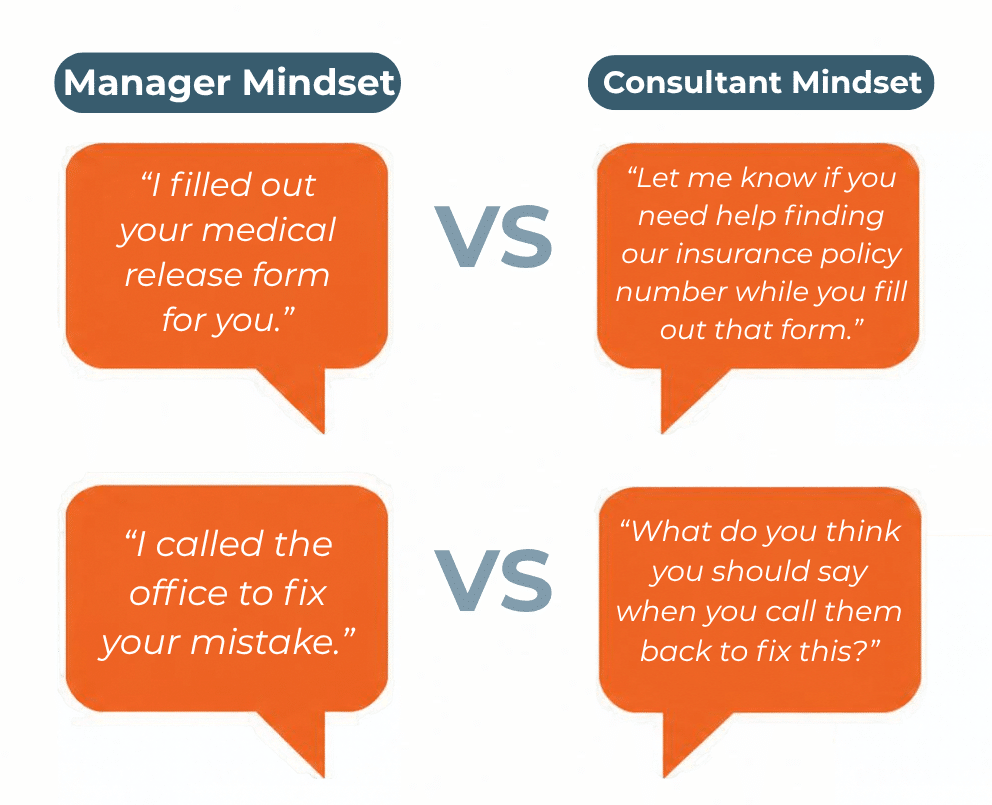
Instead of using their laptop to fill out forms after they go to bed, set up a dedicated time to sit at the kitchen table together. They sit in the driver’s seat with the keyboard; you sit in the passenger seat with a cup of coffee. You are there to answer questions, but their fingers are on the keys.
2. Practice Scaffolding Problem-Solving
When challenges arise during onboarding (such as a missing document, a rejected bank form, or a scheduling conflict), it’s easy to step in, make a call, and smooth it over. You’ve been parenting for 18 years, and you’ve been adulting for longer, you know what to do!

But this is their first opportunity to learn.
So instead, practice scaffolding: provide temporary support structures that you slowly ease up on as their problem-solving muscle develops.
- Ask Guiding Questions: When they bring you a problem, don’t give them the answer immediately. Ask, “What do you think your next step should be?” or “Where on the website do you think that information is listed?”
- Offer Options of Support, Not Control: Psychological research demonstrates that offering choice reduces anxiety and builds agency. Try saying: “I can either stay in the room while you make the phone call to customer service, or we can write down a quick script together before you dial. Which would help more?”
Practical Way to Practice: “Speakerphone Coaching”
If your student experiences phone anxiety when calling a doctor’s office or bank, have them place the call on speakerphone while you sit quietly in the room. They lead the conversation, but they know you are there as a safety net if they get completely stuck.
3. Set Up a Monthly “Adulting” Check-In
Instead of feeling the pressure to stay on top of them daily with questions like “Did you send that form yet?” or “Have you packed your ______?”, set up an intentional, predictable schedule.
- Create Space: Schedule a standing monthly or bi-weekly check-in, maybe over lunch or their favorite coffee drink.
- Review the Board: Use this time to go over their upcoming paperwork & important deadlines together. Let them run the meeting and tell you what they have accomplished and where they need guidance.
Practical Way to Practice: “Failure as a Feature”
Remember that making small mistakes during this season is a feature of growth, not a bug. If they miss a deadline or fill out a form incorrectly, refrain from saying “I was worried this would happen.” Use it as a safe learning moment by asking: “How do you plan to handle this mistake, and what can we put in place so it doesn’t happen next time?”
4. Give Them Ownership of Their Future
At the end of the day, onboarding isn’t just about administrative forms, it’s about a posture shift. You are transitioning from being their manager to being their consultant.
When you give them ownership of the process, you send a powerful psychological signal: “I believe you are capable of handling your life.”
What’s Next for Your Student?
If your student is still figuring out their next step after high school, or if you realize they need an environment specifically designed to build this kind of real-world confidence, independence, and faith, that is exactly why OneLife exists.
Our nine-month gap year is built around intentional mentorship, accredited college credits, community, and real-world travel. We provide a launchpad that sets students up to step into adulthood with clarity, capability, and conviction.
Want to learn more about how we partner with parents to launch confident young adults? Explore our program today!